Bon Appétit!
Too Many Cooks in the Kitchen May Make New Guidelines Hard to Swallow


The first person who proclaimed, “Eat, Drink, and Be Merry” was born long before the first Dietary Guidelines for Americans were issued in 1980.
But don’t worry, you can exercise as much culinary abandon as you please during the holidays. The 2025-2030 Dietary Guidelines, a joint initiative of USDA and HHS aimed at changing our food culture and reducing our obesity rate, won’t be issued until January 2026.
The unveiling of this five-year initiative was postponed from September until October, and then to December. The November government shutdown is the latest explanation for the delay.
Robert F. Kennedy, Jr.’s confirmation as Secretary of Health and Human Services (HHS) was handed to him on a silver platter, based on his revolutionary recipe for Making America Healthy Again (MAHA). Earlier this year, Kennedy boasted that the new Dietary Guidelines for Americans would be “radically simplified,” reduced to four to six pages (down from 164 pages). He’s telegraphed substantial revisions to the government’s recommendations, which underpin the nutritional health of federal food aid for mothers and infants, free school lunches, and meals at military bases and in federal prisons.
Dr. Marion Nestle, author of 15 books and professor emeritus of nutrition, food studies and public health at New York University, was a featured guest during Iowa Farmers Union’s Lunch & Learn webinar this week. Her latest book is What to Eat Now, The Indispensable Guide to Good Food, How to Find It, and Why It Matters. Nestle said she has no inside scoops on the government’s new menu, but she served up a few appetizing tidbits.
“We’re in a very strange moment in American history,” she admitted. “After Trump selected him, I heard RFK talking about the need to do something about the industrial food complex, getting toxins out of food, and reducing ultra-processed foods. I thought, well, he’s totally co-opting the language I’ve used for years.”
Leftist Plants
The current dietary guidelines recommend limiting saturated fat to less than 10% of total calories consumed daily. “There’s been a hint that saturated fat will be back,” Nestle said. “Secretary of Agriculture Brooke Rollins is saying the Dietary Guidelines will no longer reflect political science – they will reflect sound science. She said leftist ideology no longer would be guiding public food policy. I couldn’t figure out why she thought leftist ideology had influenced the guidelines. Then it came to me that she’s talking about plants and plant-based diets. So, meat will be back.”

Meat protein’s elevation to the guidelines’ main course would come at the expense of beans and legumes. “The science hasn’t changed much,” Nestle said. “Consistent evidence indicates that people would be healthier eating less meat and more plants. Less does not necessarily mean none.”
Nestle said she doesn’t consider seed oils (corn, sunflower, soy) a health problem, but she believes the guidelines will make light of seed oils, since RFK, Jr. has expressed a clear preference for beef tallow. (Many ultra-processed foods rely on seed oils.)
Compared to skim or low-fat milk, whole milk has more saturated fat and calories. I wrote in my September column, Got Milk, that saturated fat in dairy products might get a new lease on life in the new guidelines. If so, restrictions on whole milk sales to schools and Federal nutrition programs are likely to be relaxed. (Saturated fat in dairy must be balanced with overall dietary intake of saturated fat.)
Nestle said she found the MAHA initiative to replace the high fructose corn syrup used in Coca-Cola with cane sugar “nutritionally hilarious.”
Although she was excited by the aspirational tone of the first MAHA report in May, Nestle said the second report in August dashed her hopes. “It backed off of a lot of important things, like pesticides and chemicals, and mercury in fish,” she said. “Clearly the big ag lobbies got to him between these reports.”
The current Dietary Guidelines don’t mention ultra-processed foods, and Kennedy has said they “poison” Americans, leading to chronic diseases. Ultra-processed foods could be a significant addition to the new Guidelines, but Nestle said she noticed only two mentions in the August MAHA report. It’s possible no specific recommendations will be made since there’s no explicit definition for ultra-processed.
Nestle speculates that the dissonance between science and ideology is slowing down the unveiling of the new guidelines. “I’m trying to figure out the difference between the rhetoric and the reality,” she said. “We won’t know until we see the Dietary Guidelines.”
Food as a Political Weapon
An emphasis on whole foods, healthy foods, and local foods in the 2025-2030 Dietary Guidelines for Americans would be a step in the right direction. However, the guidelines will have a hard row to hoe to plant these seeds into the prevailing food landscape, and nurture their growth within the economic and social factors shaping it.

Nestle wrote her first book, Food Politics: How the Food Industry Influences Nutrition and Health, in 2002. After it was published, she said many people seemed confused about what food had to do with politics. She says that’s no longer the case today. “Food choices are shaped more by government policies and corporate business models than individual will power,” she said.
Nestle has called SNAP benefits a lifeline to families, including many who work fulltime. She seems appalled by the willingness to allow benefits to lapse during the government shutdown. “It’s shocking to use the poor as political pawns,” she said.
She clearly has no illusions about supermarkets, and the supersized role they play in the affordability and nutrition of our food. “Supermarkets aren’t social service or a public health agencies,” she said. “Their business model is selling as much food as they can to as many people as often as they can at the highest prices possible.”
Her books have focused on the slotting fees extracted by supermarkets to place products in prominent store locations. Slotting fees also keep smaller producers from gaining a foothold at stores, she said.
IFU Executive Director Matt Russell asked Nestle to comment on the proliferation of Dollar General Stores in inner cities and rural areas and the impact on the quality of dietary choices. “If stores take SNAP, they’re required to offer a certain amount of fruits and vegetables,” she said. “The USDA recently raised the number of fresh fruits and vegetables from four to seven. The Dollar General movement has caused trouble, so some communities are banning them because they undercut local stores that do a much better job. It’s very cheap food, mostly ultra-processed foods with lots of calories. These foods are designed to be irresistible and overconsumed.”
Nestle’s book is a new edition of her 2006 What to Eat. She said she found many of the latest trends “astounding.” Most notably, she singled out the substitution of bottled waters for the full sugar Coca Cola and Pepsi in grocery aisles. “There’s fizzy waters, waters with alcohol added, even water infused with cannabis,” she said. But she cautioned, “Water is good for health, but bottled water isn’t as stringently monitored as water at treatment plants. It’s just water.”
Nestle also noted the trends toward online ordering and plant based meats, along with the increasing consolidation of the grocery industry, which she has condemned for decades. “Walmart accounts for 25%-30% of groceries purchases in the United States,” she said. “So Walmart calls the shots.”
The emergence of health influencers is another new trend. “Food influencers on Tik Tok and social media often are paid to promote specific products,” she said.
Waste to Waist
Nestle points out that 75% of American adults are overweight or obese. “Between 1980 and 2000, the number of calories available per capita in the food supply increased by nearly 1,000 calories per day,” she said. “Today we produce 4,000 calories a day for every man, woman, and child. People eat 2,000 to 2,500 calories per day, so 4,000 is twice what’s eaten. Waste is built into the food system.”
She said she’d like to see more focus on public health and less on corporate health. Americans still would have choices about what to eat, but “we should make the healthier food choices easier and less expensive,” she said.
Food for Thought
I’ve written about the Intersection of food issues, agriculture, and politics for over 40 years, with a focus on agriculture. Here is a sampling of my article titles:
· Do your products fit national food trends? August 1982;
· Shoppers carry a full sack of safety concerns, 1988;
· Here’s Why our Concentrated Food System is a Consumer Problem, April 2000
I’ve also written about the Dietary Guidelines for Americans, including one title asking the question, Will the Dietary Guidelines make agriculture ill?
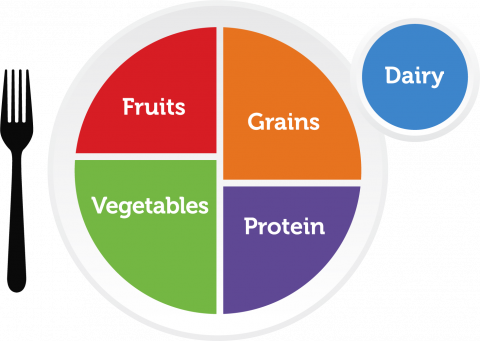
Whether the new guidelines’ graphic will be MyPlate or the Food Pyramid is hardly at the core of the issues swirling around the new guidelines. One compelling question looming over the entire MAHA movement today should be: Isn’t it counterintuitive to cut SNAP benefits and health insurance, along with grants to local food producers, and expect that the new Dietary Guidelines for Americans will amount to a hill of beans?
Nestle offers Americans food for thought. She said she practices what she preaches in her own daily diet. But she’s also admitted that food is one of life’s greatest pleasures. “We don’t prioritize cooking anymore,” she points out.
So, Bon Appétit! between December 13 and when the new guidelines are published in January! Please pass the cheese platter and the meat and potatoes, too. Consider going whole hog on holiday desserts and candies.
After all, the New Year signifies a fresh start: it’s Out with the old, In with the new! And that includes the Dietary Guidelines. With any luck, they’ll be released just in time to make our list of New Year’s Resolutions!
I’m proud to be a member of the Iowa Writers’ Collaborative. Meet our writers here, or subscribe to our free weekly roundups, “our Sunday morning newspaper,” and our Wednesday “flipside” edition featuring sports, music, culture, and other topics. Thank you!
Paid subscribers are invited to the Iowa Writers’ Collaborative holiday party, on Wednesday, December 17th, from 7:00-10:00 pm at the Harkin Institute. Food and beverage will be provided. Paid subscribers’ are plus ones and non-paid subscribers are $35.00. It’s an opportunity for readers and IWC writers to mingle, discuss column topics, and celebrate the season together.
Here’s the form to RSVP. Can’t wait to see you there!
Whatever the new food guidelines are, I’ll probably do the exact opposite. RFK JR is a crackpot who has ruined a formerly credible federal agency.
I hope the most innocuous description of the new guidelines will be that they are "interesting". Hopefully not every recommendation is one that had to be vetted by Big Ag first. I am going to use the "nutritionally hilarious" line. We all need to be on the lookout for those kind of issues in the guidance.