Growing Pains Amplify Water Woes
Boone leaders struggle to meet the watermark moment

“Rain, Too Little, Too Late, in Wrong Areas for Corn” is one of my favorite newspaper headlines. It fits the bill for summertime in Iowa – almost without fail. But not this year. Water is grabbing the headlines this July, but for a polar opposite reason: downpours have inundated the Story County Fairgrounds, flooded Des Moines homes, displaced families, and created ponds in central Iowa farm fields, leaving crops susceptible to late summer diseases.
However, the City of Boone, Iowa is being hit with a double whammy: confronting both the reality of excess summer rainfall today and the future prospect of water shortages, compounded by water quality issues. “We don’t have the perfect answer,” Councilman Kyle Angstrom said. “We’re in a bad spot, but we’re trying to fix it.”
Earlier this week, the Boone City Council invited U.S. Water Services Corporation manager Aaron Voss and McKenzie Hunt of SEH Engineering to respond to an upsurge in residents’ drinking water complaints this summer. A major rehabilitation of the 2-million-gallon Ground Water Storage Reservoir at the Boone Water Treatment Plant and removal of one water tower offline had created temporary operational changes resulting in chlorine odors and discoloration, Voss said. “It was bound to happen with all the major infrastructure projects,” he said. Voss assured residents at the meeting that the water has been safe to drink throughout the months-long process, meeting all testing standards.
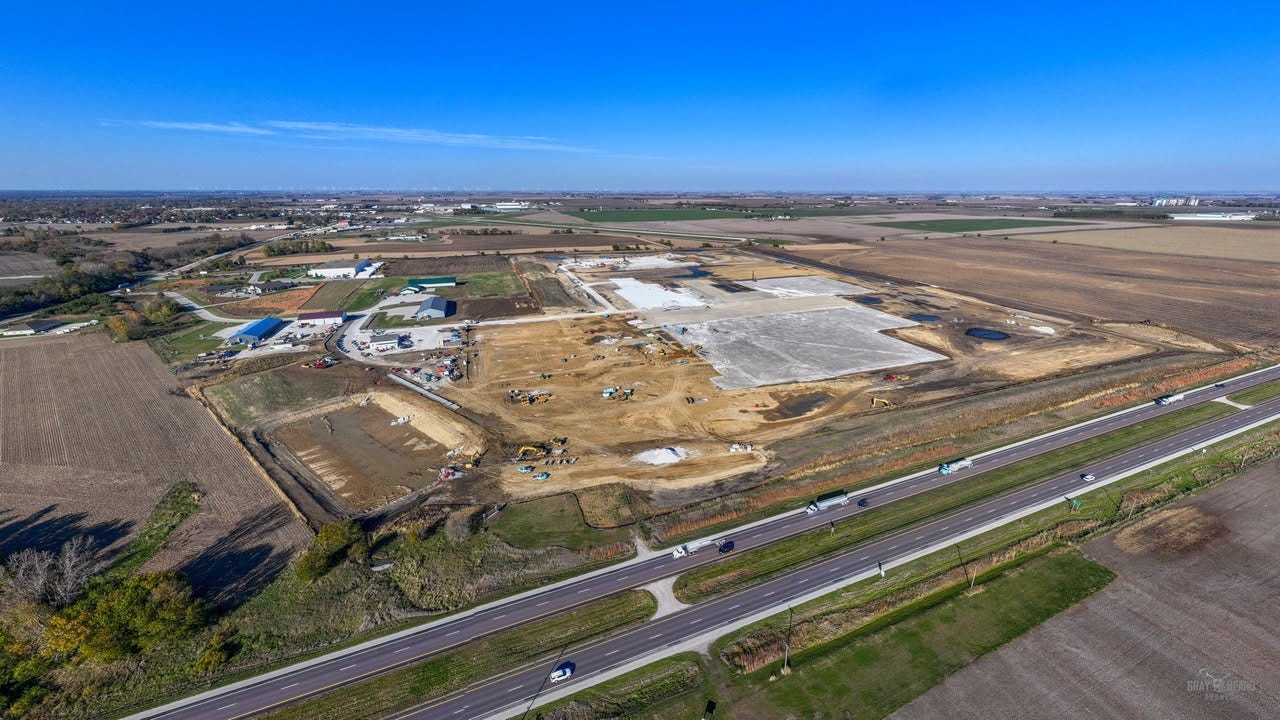
But the high water mark of the meeting came next: a public hearing to discuss the city’s plan to accommodate the massive water demands of the new 750,000 square foot Daisy Brand processing facility under construction. An environmental impact project report included in the meeting packet summed up the crux of the issue: “The addition of the Daisy Brand Industry in the community will significantly reduce the city’s operational flexibility for managing nitrates through well rotation since more of the high nitrate wells will need to be in operation to meet additional water demand.”
Two years ago Boone announced that Daisy Brand, a family-owned, Texas-based company with plants in Arizona, Texas, and Ohio, would build a $676 million processing plant here. More than $67 million state and local incentives were awarded to support the project. A total of 255 jobs will be created, with an average employee salary of $28.85 per hour, plus medical benefits. It was good news for this city of 12,400 that’s experienced incremental population growth over the past several decades. However, with growth comes growing pains.
Boone draws its drinking water from a series of shallow wells along the Des Moines River. Currently, its baseline water usage is around 1.5 to 2.1 million gallons per day (MGD). Once Daisy is fully operational in 2028, it will boost daily water usage significantly. To support this surging demand, the city has obtained a 20-year, low-interest State Revolving Fund (SRF) loan to upgrade its water and sewer infrastructure.
However, increasing water output is complicated by water quality challenges. Typically, the city maintains acceptable nitrate levels by blending water from a variety of different wells. Daisy will increase water demands so much that the city plans to dig a new lower-nitrate well to keep nitrate levels from becoming too concentrated. The primary fix is the addition of Alluvial Aquifer Well No. 30. (DNR turned down Boone’s original plan to draw from the Jordan Aquifer; alluvial wells are shallow and prone to contamination) The city also plans to build an elevated storage tank near the Daisy facility. These upgrades will maintain the current nitrate level status quo.
Boone hasn’t exceeded threshold for nitrate levels for several years. Recently, it’s ranged from 8.1 milligrams per liter (mg/L) to 8.6 mg/L, below the 10 mg/L federal drinking water standard. “Nitrates have been higher this spring than past years, but some of it is seasonal,” Voss said “It fluctuates.”
Boone doesn’t have a nitrate-removal system. Given Daisy’s launch, combined with the upward-trending Des Moines River nitrate levels, the City of Boone is discussing the need to invest in one. Council members said that it had been identified as a future need, but it’s likely to be required sooner than expected. “This has been on our radar for a long time,” Angstrom said. “Whether Daisy would come on or not, it was coming.”
McKenzie Hunt, from SEH agreed. “Given the rising nitrate levels, and expected community growth, the need for nitrate removal is probable,” she said. “Without a treatment system in place, there’s no other way to get rid of nitrates at this time. The addition of a lower-nitrate well will give the City more time to plan for the future.”
Boone residents who filled the meeting room in person and watched on Zoom questioned how a future multi-million dollar treatment facility would be paid for, and how the long-term operational costs would impact their monthly utility bills. They were told the new tower will be paid for by a grant and a water revenue bond. The revenue bond also will fund the well.
“Services are paid for by user fees and with bringing on Daisy, there will be more residents to spread the cost,” Hunt said. “It’s not so much Daisy, but the rapid expansion of homes that will put us over the limit.”
Housing Hurdles and Weighty Issues
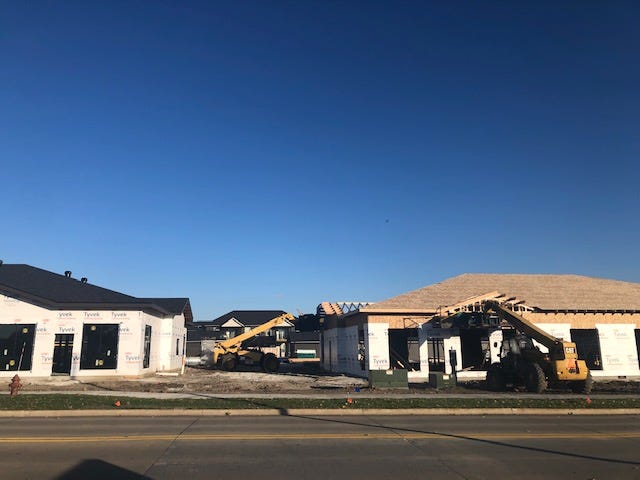
It’s hard to miss the housing boom in Boone. Three housing developments: Page Flats, Prairie Place, and Kate’s Landing, have created nearly 200 new housing units
.
“Boone has been growing so fast the past year in residential,” Hunt said “We planned for a projected number of homes through 2044, but now some estimates show Boone will grow its population to 13,500 by 2044. But that’s OK, there will be more people to spread the infrastructure costs.”
Daisy Brand’s growth in Boone will extend beyond its water needs. Dan Culhane, president and CEO of the Ames Regional Alliance, speaking at an Ames conference in June, related that Daisy asked for a higher maximum weight limit on Highway 30 between Marshalltown and Boone. The Iowa legislature complied by passing a bill with an increase for permitted vehicles transporting fluid milk: from 98,000 to 136,000 pounds. The Iowa DOT also is providing $3 million to extend roads, install a traffic signal and create a roundabout on Highway 30 near the plant site in 2027.
The city is providing $49 million in local property tax exemption over 20 years through the high-quality jobs program. The property tax exemption is 100 percent from years one through three, and 74 percent beginning year four and continuing through year 20. Beginning in year 21, Daisy has no property tax exemption.
Milk Run
Daisy Brand also will cast a large shadow beyond the city of Boone and its residents. Daisy plans on guzzling down the milk of 43,000 cows per day within a 30-mile radius. Initial reports state that 8,000 cows housed at Marshall Ridge Farms near State Center in Marshall County will “exclusively” supply this pipeline. The farm is adding 7,000 more cows to gear up for Daisy.
As far as I know, Boone County has one dairy farm, and it supplies Pickett Fence Creamery near Woodward. Sundae Morning Dairy is a micro dairy south of Boxholm selling Grade A pasteurized whole milk in glass bottles. I’ve heard rumors that a large dairy is being planned in neighboring Greene County, just beyond Daisy’s 30 mile radius. Time will tell. But with labor shortages pressuring milk production, who will milk these cows?
Iowa ranked #11 in total milk production in 2023, with about 238,000 milk cows on 1,016 farms, according to the 2022 USDA Ag Census. How much manure would 43,000 cows produce? (Granted, manure-generated electricity, produced by biodigesters, could be sold to the grid. Some USDA grant funding is available.)
But wouldn’t it be great if 43,000 dairy cows could be raised on 80 different farms . . . farms with families and children enrolled in local schools, attending local churches, and paying property taxes? Children who would grow up to become the next generation of rural leaders. That would be a win-win growth model for Iowa!
Re-inventing Its Core Identity
Boone is best known for its Chicago and North Western railroad history, and it still operates the Boone & Scenic Valley Railway. But just as central to its core was the legendary Boyd’s Dairy. In 1941 Jim and Gene Boyd opened a dairy in Boone, bottling milk and cream and making natural, 12% butterfat ice cream. They also offered butter and cottage cheese. In 1961, it expanded to Ames.
Boyd’s pioneered 50 flavors, from the ridiculous to the sublime. Jim Boyd was interviewed by NPR about unique ice cream flavors like Rhubarb Sherbet and Bubble Gum ice cream. During the annual Boone Craze Daze, Boyd’s marketed its one-of-a-kind Dill Pickle Ice Cream.
Boyd’s closed in 1986, two years after I moved to Boone County. It was one of the last dairies to sell milk in glass bottles.
At that time, Boone County had many small farms, all milking a few cows. My husband recalls three butter and cream pick-up routes through the Pilot Mound area. Nitrates weren’t a topic of conversation at that time. I hope the City of Boone can navigate the growing pains of improving its water infrastructure, and at the same time, Iowa’s elected leaders will pivot toward making nitrate reduction an economic development priority.
Protein Maxxing Grows the Market
Daisy Brand’s claim to fame is its sour cream and cottage cheese products. More than one of every two cups of sour cream sold in the U. S. comes from Daisy Brand. Daisy’s president has touted the significant growth in Daisy Brand cottage cheese sales last year.
After a 20-year decline in production and consumption, 2024 retail food industry data reveals the sale of all brands of cottage cheese rose 16%. Cottage cheese processors in Michigan, Wisconsin, and New York are expanding their facilities.
What’s going on with cottage cheese? Protein-maxxing. Cottage cheese has about 14 grams of protein per half-cup serving. Protein builds muscle and boosts metabolism, and the increasing number of Americans using GLP-1 weight-loss medications require a significant uptake in protein. Tik Tok recipes advise slathering cottage cheese in penne pasta sauce, mixing it with grilled chicken, or as a base for queso dip. If this isn’t doesn’t tempt you, other recipe options add it to smoothies, spread it on flatbreads and bagels, or pack it into pancakes.
It might be a hard sell for a national brand like Daisy’s sour cream and cottage cheese to displace Boone’s fond memories of Boyd’s Dairy, and at the same time go head to head with Anderson Erickson beloved dairy products. But Daisy Brand’s timing may be fortuitous. The Dietary Guidelines for Americans also are boosting protein consumption. With any luck, protein maxxing will continue to grow the market. No one wants to see the bloom off the Daisy before opening day in 2029. With a heaping dollop of good luck, Daisy may deliver for the City of Boone, and Boone County!
I’m a proud member of the Iowa Writers’ Collaborative. Please check out the work of my colleagues and consider subscribing to their newsletters. Thank you!
Years ago after we quit milking a 3500 cow dairy was built in our county. I talked to several leaders hoping to convince them that 10 farms with 350 cows was better than one large (350 is still too large imo). The easy way out was to have one large one. No one listened.
Thank you for this in depth piece, Cheryl.
You consistently report important, local stories. Thank you!